
Last updated: 27 September 2026
Quick Answer
At The Clothesline Store, we find a leaning rotary clothesline is usually caused by ground movement, a loose or worn ground socket, or long-term uneven loading. If it keeps leaning, replacement is safest.
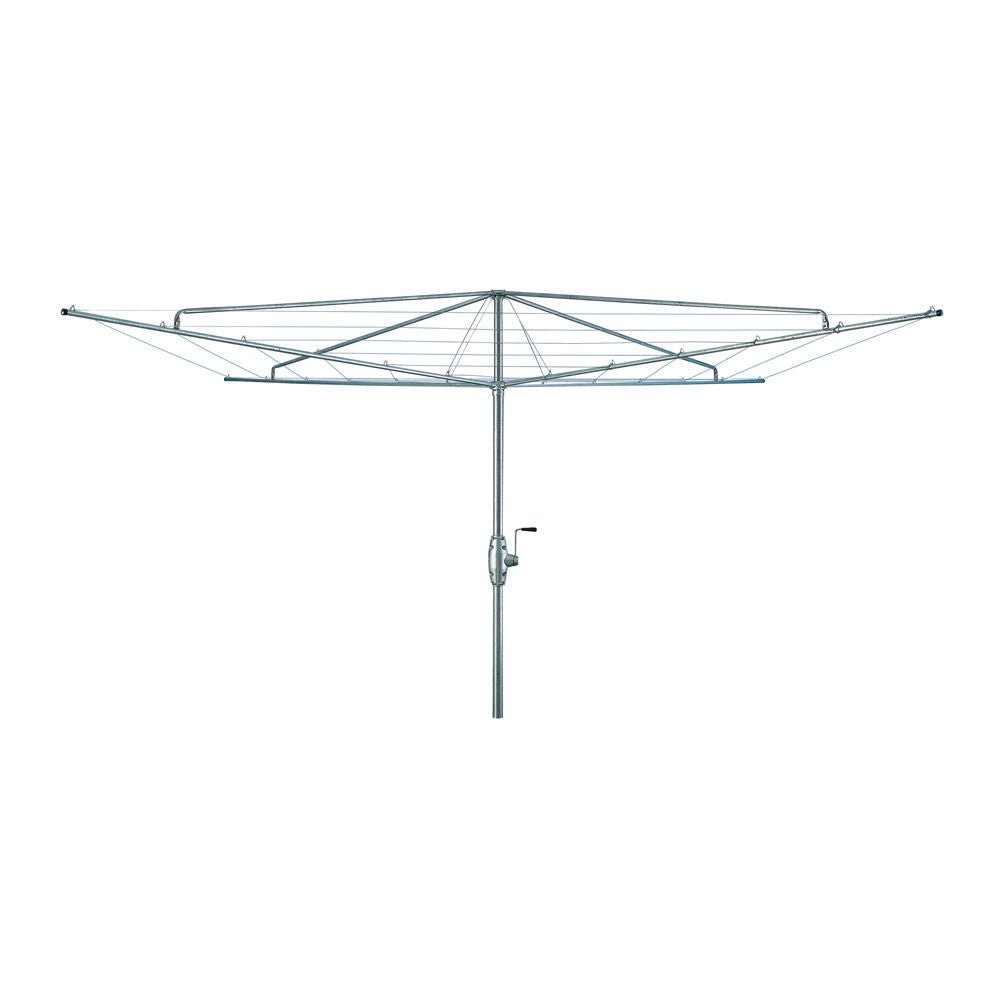
Customers often ask whether a leaning rotary hoist is something to worry about. A slight lean may seem minor, but it can point to an underlying stability issue that may worsen over time. This guide explains the most common causes, what you can safely check yourself, and when replacing the clothesline is the safer long-term option.

Important to know: With older rotary clotheslines, spare parts may no longer be available due to age. When this happens, replacing the clothesline is usually the most reliable outcome. While The Clothesline Store doesn't sell spare parts, we're always happy to help you choose a suitable replacement.
Common Reasons a Rotary Clothesline Is Leaning
Ground movement and concrete footing issues. Fixed head rotary clotheslines are installed by cementing the galvanised steel pole directly into the ground. If the concrete footing shifts, cracks or wasn't set deep enough to begin with, the pole can gradually move and lean under load.
A loose or worn ground socket. Over time the ground socket can wear or loosen, so the pole no longer sits firmly upright.
Uneven or heavy loading. Consistently hanging washing on one side places ongoing pressure on the pole, gradually encouraging it to lean.
Age and structural fatigue. Older rotary clotheslines can develop subtle bends in the pole or arms after years of use, especially when heavily loaded.
What You Can Safely Check
Check that the pole stays upright and doesn't move at ground level, and look for visible cracks or movement in the concrete footing. Watch whether the lean gets worse when washing is hung, and inspect the pole for visible bends or corrosion.
Is a Leaning Rotary Clothesline Safe?
A slight lean may not be immediately dangerous, but ongoing or worsening movement can affect stability, winding performance and safety. If the ground socket is the issue and your model is still supported, replacement parts may be available from Hills Parts. If the clothesline keeps leaning or feels unstable, replacement is often the safer and more reliable solution.
When to Replace Instead of Repair
Replace your rotary clothesline if the pole is bent or corroded, the ground socket no longer holds securely, it leans further when loaded, or the hoist is more than 15 to 20 years old.
Choosing a Replacement Rotary Clothesline
Modern rotary clotheslines are designed with stronger poles, improved ground socket systems and better overall stability. If you'd rather free up the middle of your yard, an Air Dry fold down clothesline, Australian made from 100% Australian steel, gives generous hanging space and folds flat against a wall or ground mount legs.


Related Guides from The Clothesline Store
Find out how to measure for a new rotary clothesline, read about common folding rotary clothesline problems, and see why clothesline maintenance matters.
FAQs: Leaning Rotary Clotheslines
Is a leaning rotary clothesline dangerous?
A slight lean may not be immediately dangerous, but ongoing movement can affect stability and increase the risk of failure.
Can a leaning rotary clothesline be fixed?
Minor movement can sometimes be corrected, but ongoing leaning often points to structural issues or problems with the ground socket.
Does uneven loading cause a rotary clothesline to lean?
Yes. Repeatedly loading one side places extra strain on the pole and ground socket over time, which can cause leaning.
Should I keep using a leaning clothesline?
If the lean is getting worse or the clothesline feels unstable, replacement is usually the safer option.
Where can I buy a new rotary clothesline?
Online from The Clothesline Store, Australia's largest private clothesline stockist since 2003, with a 4.9 out of 5 star customer rating.
Final Thoughts
A leaning rotary clothesline is often a sign of ground movement or age-related wear. Minor issues may seem manageable, but replacing an unstable hoist gives you better safety, reliability and long-term peace of mind.
Shipped Direct From Our Warehouse
As Australia's largest private stockholder of clotheslines and accessories, The Clothesline Store ships in-stock items the same or next business day from our own national warehouse, with a 4.9 out of 5 star customer rating.